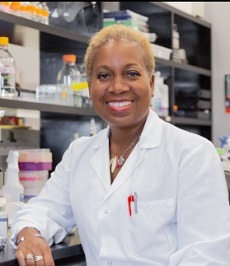
With deep regret, we announce the passing of Dr. Juliet Daniel, a distinguished Barbadian-Canadian cancer biologist and Professor at McMaster University, who died on April 28, 2026, at the age of 61 after a battle with metastatic breast cancer. Born in Barbados, she built an extraordinary career in Canada that combined groundbreaking science with passionate advocacy for equity in academia and health.
Dr. Daniel was a pioneering researcher renowned for discovering and naming the Kaiso gene, a transcriptional regulator that plays a critical role in cancer progression, particularly in aggressive forms such as triple-negative breast cancer that disproportionately affects Black women.
Her studies at McMaster highlighted health inequities and advanced understanding of how this gene influences cell behavior and tumor growth. As Associate Dean of Research and External Relations in the Faculty of Science, she championed rigorous science while mentoring emerging scholars with dedication and warmth.
A tireless community advocate, Dr. Daniel co-founded the African Caribbean Faculty Association of McMaster (ACFAM), helping shape an inclusive environment that supported Black and Caribbean academics and students. Her leadership extended beyond the lab, fostering mentorship programs and pushing for greater representation in STEM fields. Colleagues remember her as a beacon of hope who combined intellectual brilliance with genuine care for people and their lived experiences.
She earned numerous accolades throughout her career, including the Ontario Premier’s Research Excellence Award and recognition from the University of the West Indies. Proud of her Barbadian roots, she infused her scientific contributions with cultural pride, even naming the Kaiso gene after a traditional Caribbean music form. Her passing has prompted tributes from university leaders, the Barbadian government, and scientific communities mourning the loss of a trailblazer.
McMaster University described her life as one of “extraordinary consequence,” noting the deep void left in the Department of Biology and the broader campus. Friends and mentees highlighted her ability to break barriers while remaining approachable, always encouraging others to pursue excellence without compromise. Her advocacy continues to influence efforts toward equity in Canadian higher education and cancer research.
Dr. Juliet Daniel will be remembered as a brilliant scientist, devoted mentor, and compassionate advocate whose legacy endures in the Kaiso gene discovery, the careers she helped launch, and the more inclusive scientific community she helped build. Though her time ended too soon, the hope and excellence she embodied will guide future generations of researchers.
